
Concrete NDT Testing Services
Non-Destructive Testing (NDT) of concrete is a vital process used to assess the strength, durability, and integrity of concrete structures without causing any damage to them. In the construction and infrastructure industry, NDT is essential for evaluating the quality of concrete, detecting internal flaws like cracks and voids, and monitoring the effects of environmental deterioration such as corrosion and carbonation. Our Concrete NDT Testing Services utilize advanced techniques such as Carbonation testing, Half Cell Potential, Rebound Hammer Test, and Ultrasonic Pulse Velocity (UPV) to provide accurate data on the condition of your concrete. By implementing these rigorous testing methods, we help clients ensure structural safety, extend the lifespan of their assets, and comply with industry standards.
Carbonation Testing
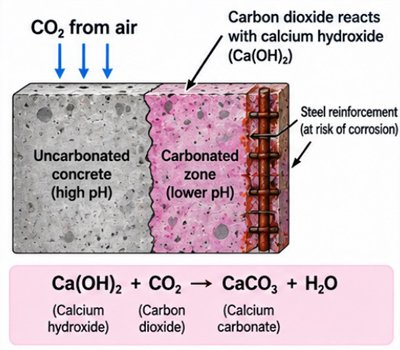
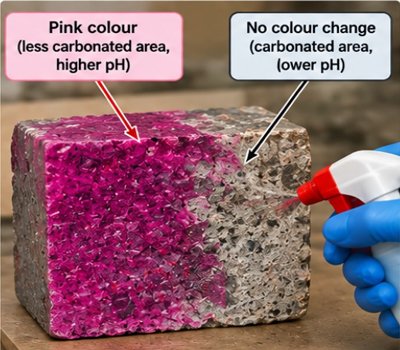
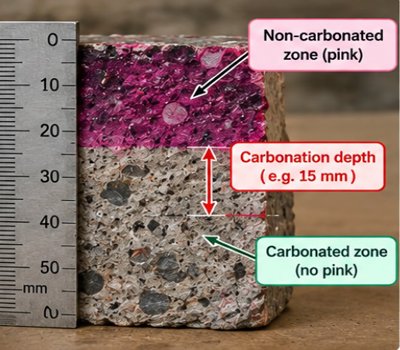
Carbonation is a chemical process where carbon dioxide from the air reacts with calcium hydroxide in concrete to form calcium carbonate. While this can initially increase surface strength, it lowers the pH of the concrete, reducing its ability to protect embedded steel reinforcement from corrosion. Carbonation testing measures the depth of carbonation using a phenolphthalein indicator solution. This test is crucial for assessing the remaining service life of concrete structures and determining the risk of reinforcement corrosion.
Half Cell Potential
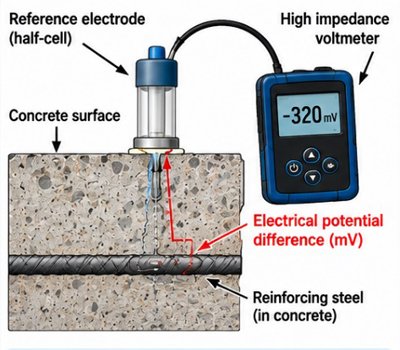
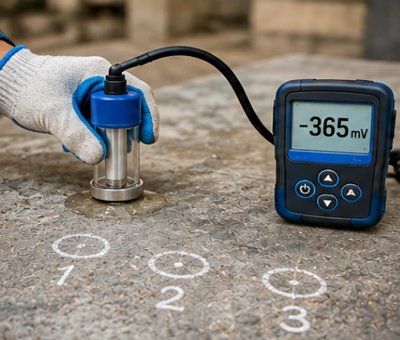
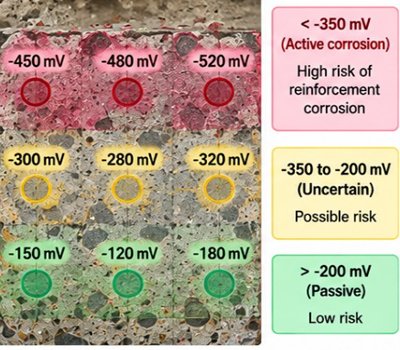
The Half Cell Potential test is a non-destructive electrochemical method used to assess the likelihood of corrosion activity in reinforcing steel within concrete. By measuring the electrical potential difference between a reference electrode (half-cell) placed on the concrete surface and the reinforcing steel, the test identifies areas of active corrosion. This method is highly effective for locating regions where the passive oxide layer on the steel has broken down due to chloride ingress or carbonation, allowing for targeted repairs.
Rebound Hammer Test
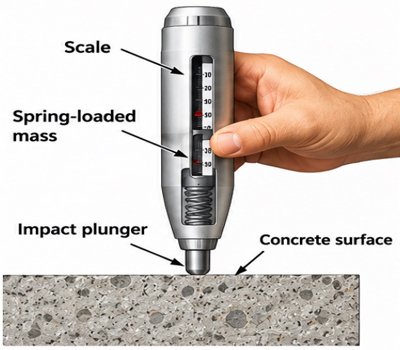
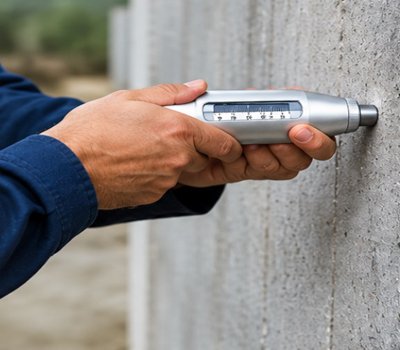
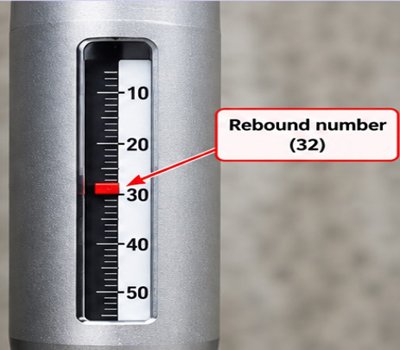
The Rebound Hammer Test (also known as the Schmidt Hammer Test) is a widely used method for assessing the compressive strength and uniformity of concrete. The test measures the rebound velocity of a spring-loaded mass impacting the concrete surface; a higher rebound number indicates higher surface hardness and, consequently, higher compressive strength. While it primarily evaluates the surface layer, it is an excellent tool for quick, in-situ quality control and for mapping variations in concrete quality across a structure.
UPV (Ultrasonic Pulse Velocity)
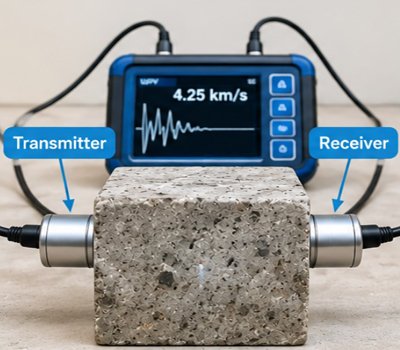
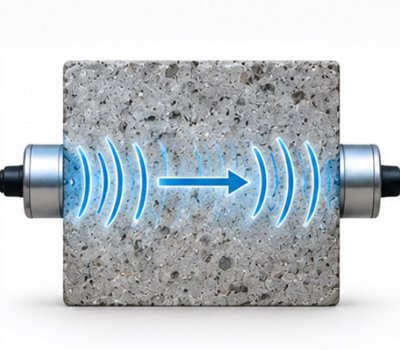
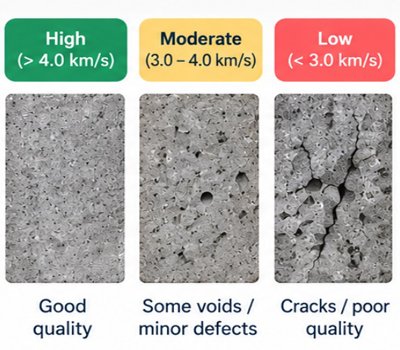
The Ultrasonic Pulse Velocity (UPV) test is a sophisticated method used to assess the quality and homogeneity of concrete. It measures the speed of an ultrasonic pulse traveling through the concrete; a higher velocity indicates denser, higher-quality concrete, while a lower velocity can indicate internal voids, cracks, or deterioration. This test is ideal for detecting internal flaws, estimating the depth of cracks, and evaluating the uniformity of concrete in large structural elements like foundations and columns.
Accreditation