
Steel NDT Testing Services
Nondestructive testing (NDT) is a critical process used to inspect, test, and evaluate the properties of steel materials, components, and assemblies without causing any damage to the original part. In the context of steel fabrication and construction, NDT is essential for ensuring structural integrity, detecting surface and internal discontinuities, and verifying weld quality. Our Steel NDT Testing Services utilize advanced techniques such as Magnetic Particle Testing, Liquid Penetrant Testing, and Ultrasonic Testing to identify flaws like cracks, porosity, and lack of fusion. By implementing these rigorous testing methods, we help clients ensure safety, compliance with industry standards, and the long-term reliability of their steel structures.
Magnetic Particle Testing (MT)
Magnetic Particle Testing uses magnetic fields to locate surface and near-surface discontinuities in ferromagnetic materials like steel. When the magnetic field encounters a discontinuity, flux lines produce a leakage field. Fine ferromagnetic particles are applied to the surface and are drawn into the discontinuity, creating a visible indication. This method is highly effective for detecting cracks, seams, and laps in steel components.
Liquid Penetrant Testing (PT)
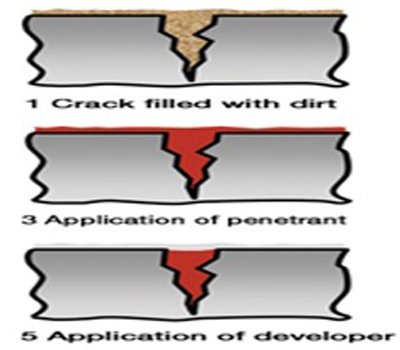
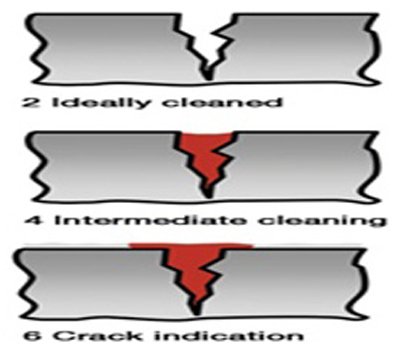
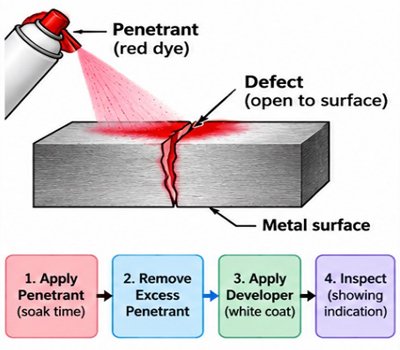
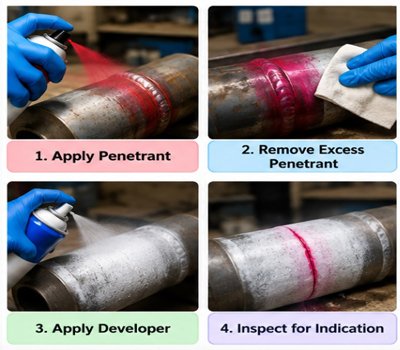
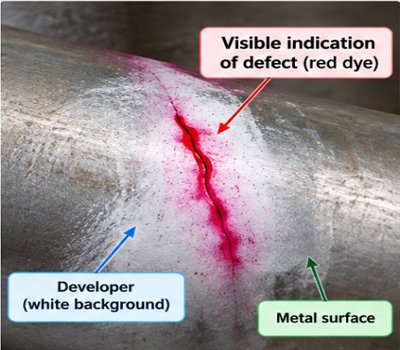
Liquid Penetrant Testing is a widely used method for detecting surface-breaking defects in non-porous materials. A low-viscosity liquid penetrant is applied to the surface, which seeps into fissures and voids. After removing excess penetrant, a developer is applied to draw the trapped penetrant back to the surface, creating a visible indication. This method is excellent for inspecting welds, castings, and forged steel parts.
Ultrasonic Testing (UT)
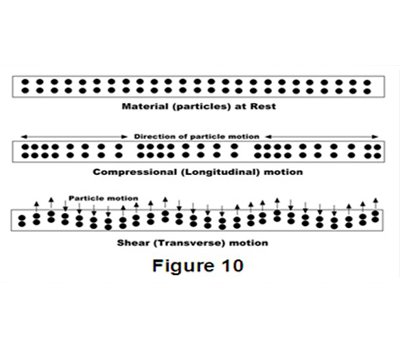
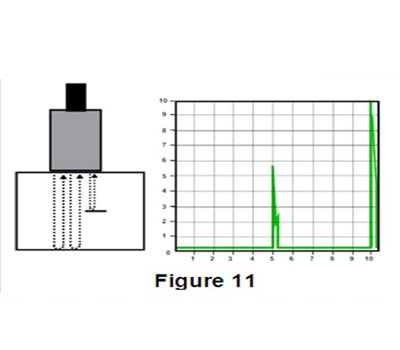
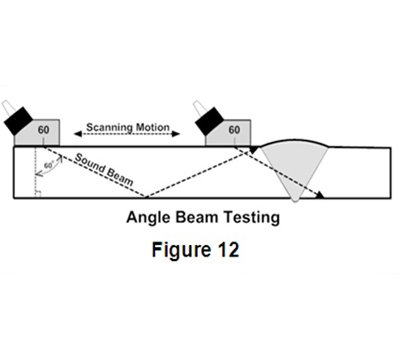
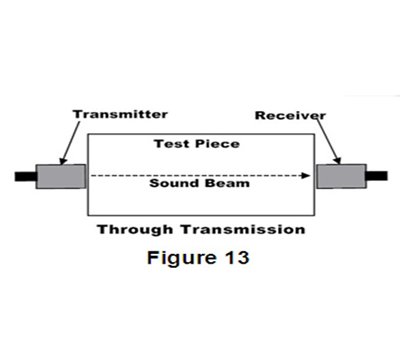
Ultrasonic Testing uses high-frequency sound waves to detect internal flaws and measure material thickness. A transducer introduces sound waves into the steel part; when the sound hits a discontinuity or the back wall, it reflects back. By analyzing the reflected signals, inspectors can determine the location, size, and orientation of internal defects. This method is highly effective for volumetric inspections of welds and heavy steel sections.
Ultrasonic Thickness Measurement (UTM)
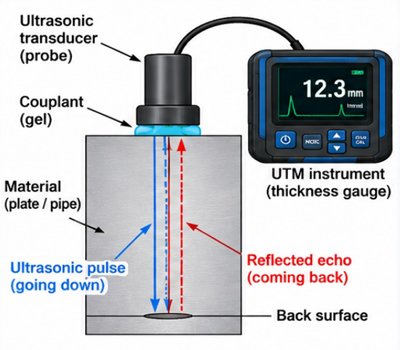
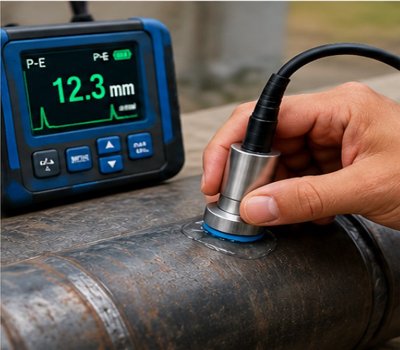
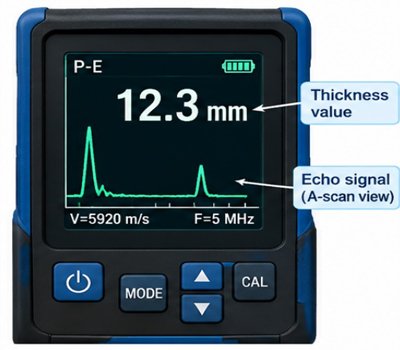
Ultrasonic Thickness Measurement is a non-destructive technique used to measure the thickness of steel materials, particularly for assessing corrosion and erosion. A transducer emits sound waves that travel through the material and reflect off the back wall. By measuring the time taken for the sound to return, the thickness is calculated. This is vital for monitoring the integrity of pipelines, pressure vessels, and storage tanks.
Accreditation